

Storyscape


Storyscape
Faster Than a Painted Sky
Listen to audiobook


The City That Hums Before Sunrise
Canvas City woke up the same way every morning — slowly, and with color.
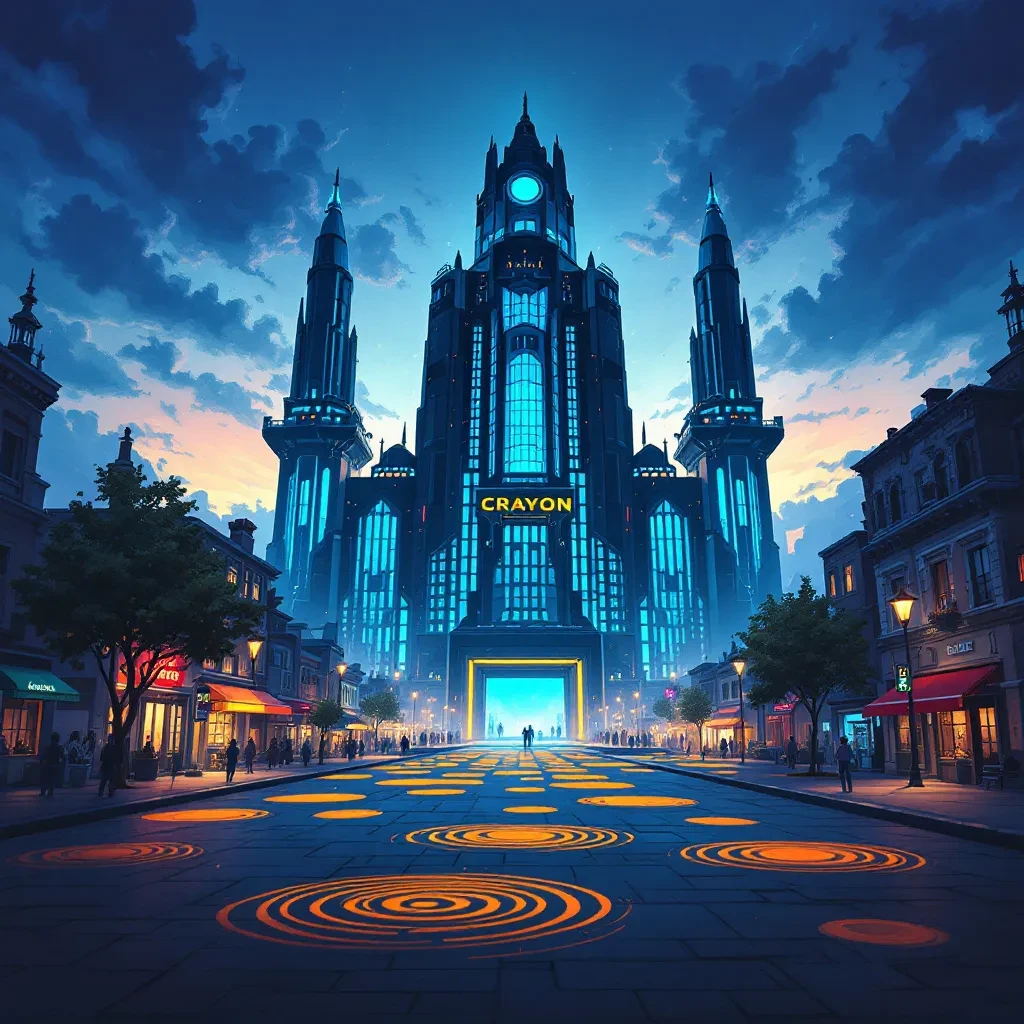
The storefronts along Palette Avenue flickered on one light at a time. A pair of humanoid goats in paint-speckled aprons swept their front steps. A deer woman in a yellow coat walked her terrier past the fountain at Central Square, where someone had painted bright orange spirals on the pavement overnight. Nobody knew who. Nobody ever did.
At the center of it all stood the Crayon Paintbrush Fortress — sharp, black, and impossibly tall. Its blue windows caught the early light like chips of sky. The crayon tower stood on the left. The paintbrush tower rose on the right. Between them, a door the size of a shipping container slid open without a sound.
Crayon Paintbrush Man stepped out onto the wide front platform, blue goggles pushed up on his forehead, oversized crayon clipped to his belt.
He stretched both arms over his head and looked out at the city.
"Quiet," he said to no one.
He liked quiet. It never lasted.
The Morning That Moved First
Crayon Paintbrush Man was halfway through his second cup of coffee when his phone buzzed on the fortress railing.
It was a video. Someone had recorded it from the window of a bakery on Palette Avenue. The footage was shaky, but clear enough.
A girl — running.
Not jogging. Running so fast that the wind off her heels kicked up a napkin from a café table and sent it spinning twenty feet into the air. She cleared the full length of Palette Avenue in four seconds flat, then cut around the Central Square fountain without slowing down at all.
He watched it three times.
His own top speed on foot was six seconds for that same stretch. He had clocked it himself.
He set the cup down slowly.
The comments on the video were already going. A humanoid sheep with round glasses had reposted it with the caption: *"ok but who IS she"*
He looked out at Canvas City. The orange spirals on the fountain pavement caught the morning light. They were still there, dry and bright, like they had always belonged.